The rise of green finance over the past decade, European reporting requirements, and the enormous funding needs of the energy transition have created a convergence between the expectations of financial players and the innovative capacity of tech-savvy entrepreneurs. Luxembourg has, in recent years, attracted a growing number of green FinTech companies, supported by its established FinTech ecosystem and its position as a leading global centre for sustainable finance.
How did green FinTechs emerge? Michael Grimm, founder of Luxembourg-based company SPONSOR, became aware of the stakes of climate change in 2009, when his father died of lung cancer after living near a coal power plant in Michigan most of his life. Following roles at major financial institutions like World Bank linked to climate finance, Grimm established Sponsor to address the gap between the estimated $2.0 trillion currently mobilised annually for climate finance and the $5.5 trillion required. The company launched a digital marketplace in August 2025 designed to connect all stakeholders such as project developers, investors, and legal and technical advisers. The platform already supports over €35 billion of climate mitigation projects.
SPONSOR aims to provide the industry with the tools needed to enable faster deal execution. “There is great urgency, and project finance experts are already fully booked. We therefore need to work more intelligently. In addition to the marketplace, we provide users with a large number of reference documents from past transactions that allow us to replicate what has already worked well, rather than starting from scratch each time. We also have AI, robust datarooms, and other tools to enable faster execution.


“There is great urgency, and project finance experts are already fully booked. We therefore need to work more intelligently.”

An environment that makes the difference
In 2025, Grimm participated in and was selected as a winner of the “Catapult Green Fintech” programme run by the Luxembourg House of Financial Technology (LHoFT), and supported by the Ministry of Finance. The programme connects early-stage technology firms with financial sector participants in Luxembourg and provides a platform to present solutions in sustainable finance. Launched in 2024, the initiative forms part of LHoFT’s broader role in supporting fintech development. The third edition will take place from 14 to 18 September 2026.
The programme also introduced the London-based company ZERO13 to Luxembourg’s financial ecosystem. Operating within the GMEX Group, ZERO13 has developed a digital platform intended to connect carbon market infrastructure across jurisdictions. Built on blockchain and artificial intelligence, it links registries, exchanges and market participants, with the aim of improving transparency and interoperability in carbon credit trading. Following its participation in the 2025 Catapult Green Fintech programme, the company is looking to establishing a presence in Luxembourg, including a potential regional office in the second half of the year. It is also assessing the possibility of relocating its global headquarters over the medium term. “We want to benefit from a regulatory framework that facilitates integration between traditional finance and digital finance”, explains its CEO, Hirander Misra.
Luxembourg’s role in sustainable finance remains a factor in these considerations. According to a joint study by LSFI, PwC Luxembourg and ALFI, published in March 2026, Luxembourg accounted for 31% of European assets under management in UCITS funds with sustainable objectives (€815.4 billion) at the end of 2025, as well as 77% of European assets (€855.6 billion at end-2024) in private market funds with sustainable strategies. Moreover, the Luxembourg Stock Exchange is the leading global centre for GSSS bond listings, with more than 2,400 sustainable securities accounting for a total issuance volume exceeding 1.3 trillion euros.
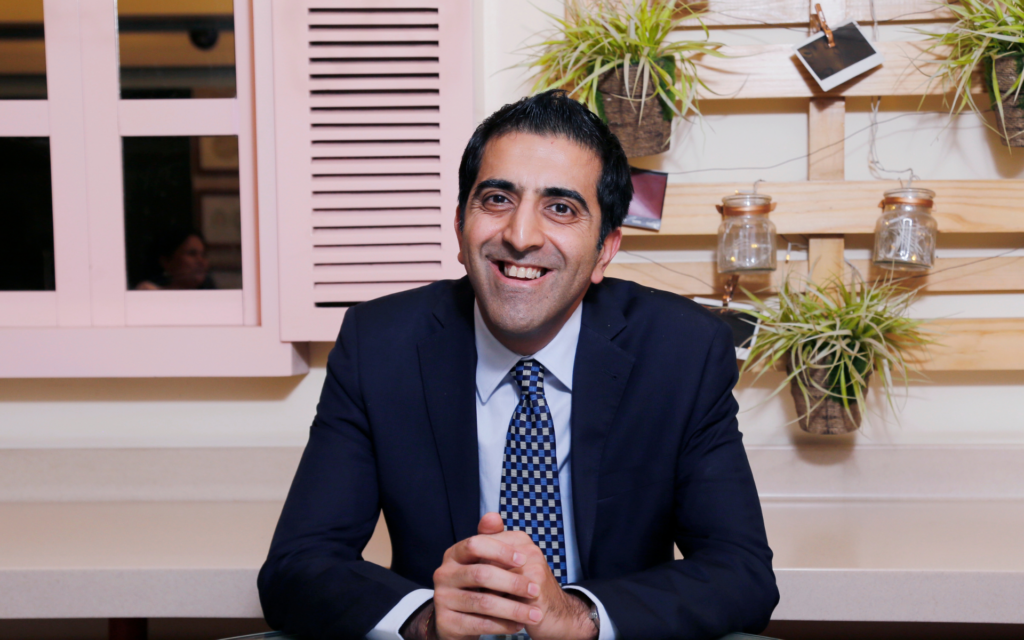
“We want to benefit from a regulatory framework that facilitates integration between traditional finance and digital finance.”
The race for data
In December 2022, the LHoFT and Deloitte Luxembourg published the study Fintech for Sustainable Finance, which identified data management as a primary challenge for financial institutions. The report highlighted the need to collect, consolidate, validate and report reliable ESG data. “Data is both the main focus of ESG fintechs and the main area of need for financial institutions,” it noted.
Data is the key critical factor addressed by Luxembourg-based start-up METRICSAT, founded by Loise Wandera in 2022. Still in the research and development phase, the company is finalizing a platform which provides physical risk assessment at asset and portfolio level using satellite and meteorological data. Wandera explained that the SFDR requirements to be implemented starting from March 2021 prompted her to leverage the rich and objective data set from satellite images to provide financial institutions with objective risk metrics to enhance their risk management practice. “Our approach enables us to provide them with assessments of environmental risk based on real data rather than figures drawn from reports and questionnaires. Financial players do not have environmental experience to analyse environmental metrics by themselves. They want to directly obtain a credible figure on the probability of experiencing a flood or a drought.”
Symbiose Management applies a similar approach, focusing on the valuation of forest assets. Its president, Marwen Nefati, points to the limitations of traditional valuation methods. “Until now, the valuation of plots was carried out by forestry experts and remained somewhat uncertain. Thanks to spatial technologies, we can work at the level of individual trees using very high-resolution satellite data. This allows us both to accurately assess the condition of a plot and to make projections about its health over the medium or long term.”
After the success at the Fit4start program, the company is developing activities in Luxembourg, citing the presence of institutions such as the European Investment Bank, as well as the scale of the fund industry, including forestry funds. It also refers to Luxembourg’s space-related ecosystem and access to computing infrastructure such as the MeluXina supercomputer. “It allows us to differentiate ourselves from our competitors, and it is also the most environmentally friendly supercomputer in Europe. For us, that is meaningful,” explains Nefati.

“Right now, talking about environmental impact is no longer enough. You need to bring together people, planet and profit.”
The fight against climate change must continue
Recent geopolitical and policy developments have raised questions about the trajectory of sustainable finance. Grimm considers that underlying demand remains in place, noting that a large share of the global population continues to prioritise climate-related issues. “We are running out of time but there’s still 14% chance to stay on a good trajectory and we need to seize it. What projects need is a pathway to bankability and support from the various financing institutions to get off the ground.”
Nefati observes continued investor interest in natural capital. A recent study by Mercer indicates that “nature finance” has reached $13.4 billion, with investments in forests increasing by 30% since 2020.
Wandera notes that conditions in the sustainable investment sector have become more demanding, leading to adjustments in how solutions are presented. “Right now, talking about environmental impact is no longer enough. You need to bring together people, planet and profit. That is far more convincing than defending ESG on purely moral grounds.”
Green fintech firms are becoming more visible within Luxembourg’s broader fintech ecosystem, which includes more than 250 companies. Their development reflects ongoing demand for tools that support ESG data analysis, risk assessment, and capital allocation. Adoption by financial institutions remains a determining factor in their further expansion.
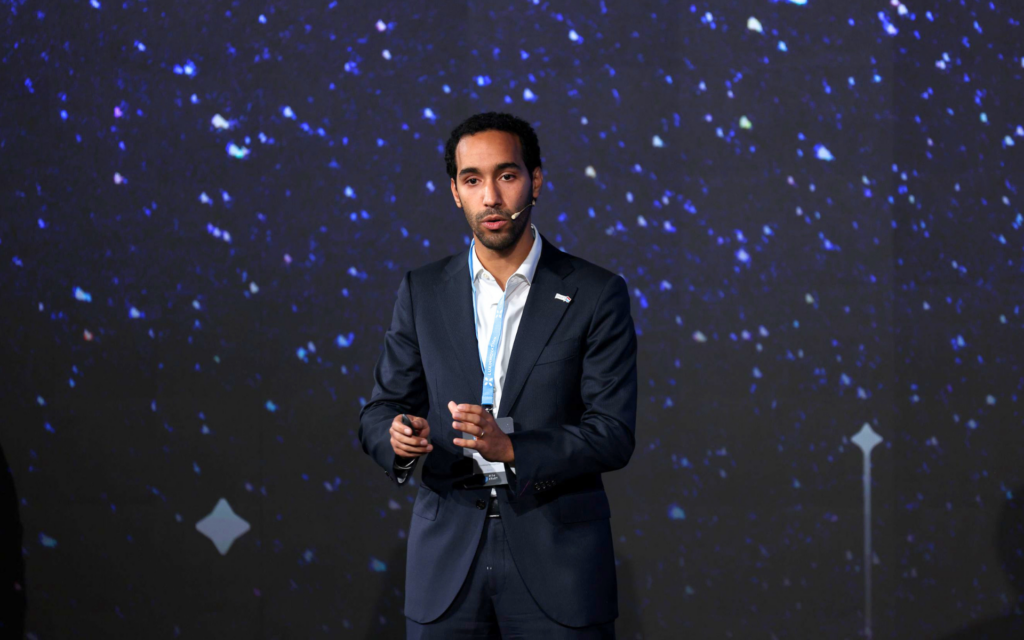
“Thanks to spatial technologies, we can work at the level of individual trees using very high-resolution satellite data.”